Spanning four decades of pioneering contributions in radiation science, selenium biochemistry & translational pharmacology
Pioneering Science in

Radiation Chemistry &
Chemical Biology

Dr. K. Indira Priyadarsini is a distinguished scientist with over 36 years of groundbreaking research at Bhabha Atomic Research Centre and continuing contributions at CEBS, Mumbai University. Her work spans radiation chemistry, selenium biology, curcumin research, radioprotectors, anti-cancer agents, nanomaterials, and drug delivery.
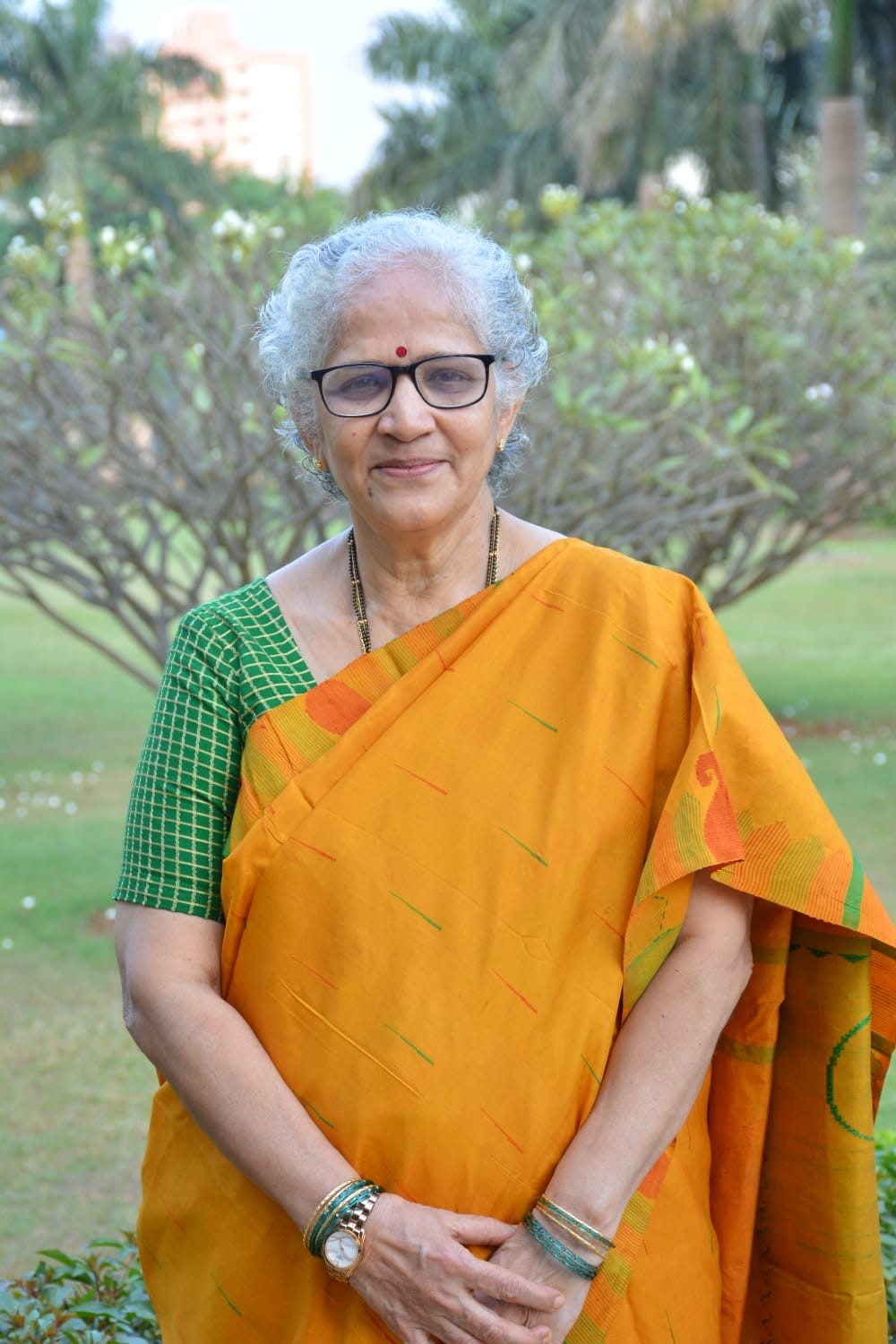
Stanford Top 2% Scientist since 2020 FNASc · FRSC · FMASc 6+ Technologies Transferred
351+
Research Papers
18,043+
ResearchGate Citations
4
Patents Held
6+
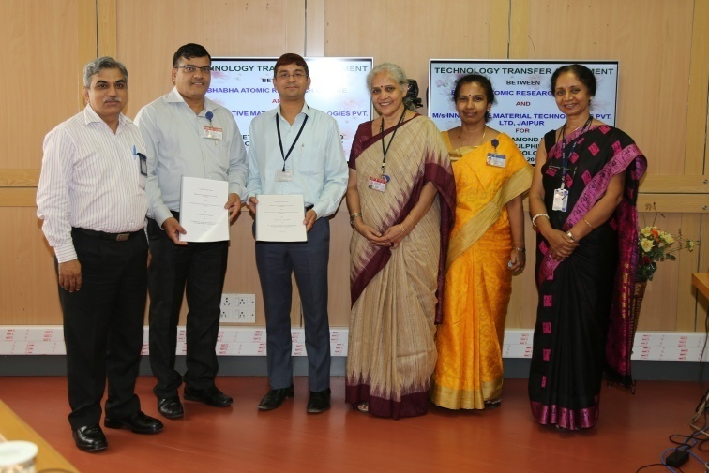
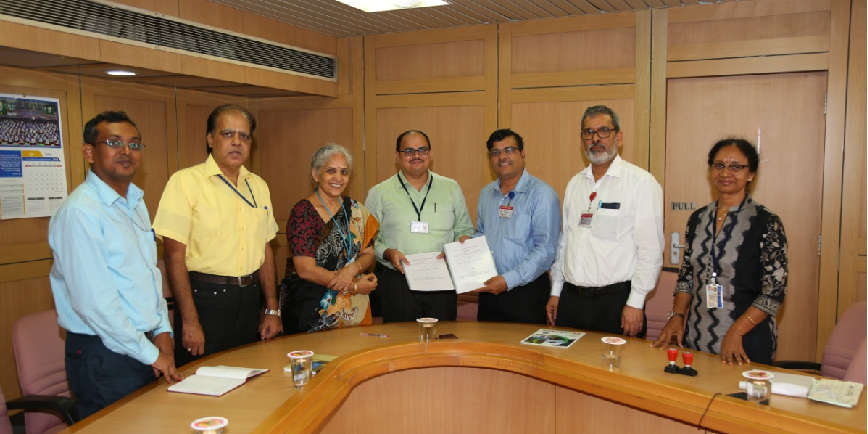
Technologies Transferred
Dr. K. Indira Priyadarsini
NASI SENIOR SCIENTIST
DAE Centre for Excellence in Basic Sciences (CEBS), Mumbai University E-mail k.indira@cbs.ac.in
Radiation Chemistry Selenium Biology Curcumin Research Nanomaterials Drug Delivery
ResearchGate & Career Highlights

Scholarly impact at a glance

A concise snapshot of profile strength, career output, and translational contributions.

351+
Research Papers
Peer-reviewed publications
18,043+
ResearchGate Citations
Total citation count
65,482+
ResearchGate Reads
Profile engagement
4
Patents
Registered innovations
6+
Technologies Transferred
Real-world industry impact
14
Invited Talks (2021–2024)
Conferences & symposia
Areas of Expertise

Research excellence across chemistry & biology

From pulse radiolysis and selenium redox chemistry to curcumin analogues, radioprotectors, anti-cancer agents, and nano-formulations for enhanced bioavailability.

🔬

Photochemistry

Study of chemical reactions initiated by light absorption, including photosensitization and photodegradation mechanisms.

☢️

Radiation Chemistry

Investigation of chemical effects of ionizing radiation, pulse radiolysis studies of free radical reactions.

⚗️

Selenium Chemistry

Design and synthesis of organoselenium compounds as antioxidants, radioprotectors and glutathione peroxidase mimics.

🌿

Curcumin Research

Exploring the chemistry, free radical reactions and pharmacological properties of curcumin and its analogues.

🛡️

Radioprotectors

Development of selenium-based compounds to protect against radiation-induced damage.

🔭

Nanoparticles

Synthesis and characterization of nanoparticles for drug delivery and cancer therapeutics.

Scholarly Output

Selected publications

351 research papers across 4+ decades — highly cited in radiation chemistry, selenium biology, and natural product pharmacology.

2026

Antioxidant Activity and Cytotoxicity of Selenium Incorporated Biologically Inspired N-Heteroaryl Compounds

VK Jain, IK Priyadarsini
Biological Trace Element Research 204 (1), 538-550
2 citations
2025

Hybrid PVA composites with basalt fiber and functionalized biocarbon: Mechanical strengthening and EMI shielding efficiency

S Mohanasundaram, D Kumar, SM Kumar, I Priyadarsini
Journal of Thermoplastic Composite Materials
1 citations
2025

Probing One-Electron Transfer in Selected Trace Elements

Indira Priyadarsini
Article, Jun 2025
2025

Millet-Mediated Green Synthesis of Zinc Oxide Nanoparticles: Dual Antidiabetic and Antioxidant Mechanisms toward Nano-Nutraceutical Applications

P Naveen, G Mamidi, I Priyadarsini
2024

Inhibition of α-Synuclein fibrillation by curcumin and difluoro boron derivatized curcumin complexes in aqueous environment

SA Shaikh, IK Priyadarsini, S Choudhary
Journal of Molecular Liquids 405, 125063
4 citations
2024

Selenium compounds as promising antiviral agents

V. K. Jain, Indira Priyadarsini
Journal Article (2024)
2024

Selenium: A Wonder Element in Life and for Life

V. K. Jain, Indira Priyadarsini
Journal Article (2024)
2023

Combating planktonic and biofilm growth of Serratia marcescens by repurposing ebselen

SA Shaikh, B Patel, IK Priyadarsini, SL Vavilala
International Microbiology 26 (4), 693-704
10 citations
2023

A redox active organodiselenide as an efficacious catalyst for synthesis of oxygen containing heterocyclic compounds

Noimur Rahman, Nisha Kushwah, Indira Priyadarsini
Journal Article (2023)
2022

Ebselen potential to inhibit planktonic and biofilm growth of Neisseria mucosa

SA Shaikh, IK Priyadarsini, SL Vavilala
Current Chemical Biology 16 (1), 61-69
4 citations
2022

Selenium and Platinum Compounds in Cancer Therapy: Potentiality of their Progeny as Future Chemotherapeutics

Indira Priyadarsini, V. K. Jain
Journal Article (2022)
2021

Elucidating the anti-biofilm and anti-quorum sensing potential of selenocystine against respiratory tract infections causing bacteria

B Patel, S Mishra, IK Priyadarsini, SL Vavilala
Biological Chemistry 402 (7), 769-783
13 citations
2021

3,3-Diselenodipropionic acid (DSePA): A redox active multifunctional molecule of biological relevance

A. Kunwar, Indira Priyadarsini, V. K. Jain
Journal Article (2021)
2020

Glutamic acid-coated Fe3O4 nanoparticles for tumor-targeted imaging and therapeutics

B Dutta, A Nema, NG Shetake, J Gupta, KC Barick, MA Lawande, IK Priyadarsini
Materials Science and Engineering: C 112, 110915
79 citations Featured
2020

Electrostatically bound lanreotide peptide-gold nanoparticle conjugates for enhanced uptake in SSTR2-positive cancer cells

SB Shelar, SL Gawali, KC Barick, A Kunwar, A Mohan, IK Priyadarsini
Materials Science and Engineering: C 117, 111272
8 citations
2017

Effect of low-dose selenium supplementation on the genotoxicity, tissue injury and survival of mice exposed to acute whole-body irradiation

P Verma, A Kunwar, K Indira Priyadarsini
Biological Trace Element Research 179 (1), 130-139
18 citations
2017

Selenium: Chemical biology, toxicology and radioprotection

Indira Priyadarsini, Beena G Singh, Amit Kunwar
Journal of Chemical Sciences (2017)
2016

Alkyl chain modulated cytotoxicity and antioxidant activity of bioinspired amphiphilic selenolanes

P Verma, A Kunwar, K Arai, M Iwaoka, K Indira Priyadarsini
Toxicology Research 5 (2), 434-445
22 citations
2014

The Chemistry of Curcumin: From Extraction to Therapeutic Agent

Indira Priyadarsini
Molecules (2014)
2013

Chemical and structural features influencing the biological activity of curcumin

K Indira Priyadarsini
Current Pharmaceutical Design 19 (11), 2093-2100
383 citations Featured
2013

Current developments on synthesis, redox reactions and biochemical studies of selenium antioxidants

K Indira Priyadarsini, B G Singh, A Kunwar
Current Chemical Biology 7 (1), 37-46
24 citations
2011

Multitargeting by curcumin as revealed by molecular interaction studies

SC Gupta, S Prasad, JH Kim, S Patchva, LJ Webb, IK Priyadarsini et al.
Natural Product Reports 28 (12), 1937-1955
837 citations Featured
2011

Differential antioxidant/pro-oxidant activity of dimethoxycurcumin, a synthetic analogue of curcumin

A Kunwar, A Barik, SK Sandur, K Indira Priyadarsini
Free Radical Research 45 (8), 959-965
68 citations Featured
2011

Interaction of a curcumin analogue dimethoxycurcumin with DNA

A Kunwar, E Simon, U Singh, RK Chittela, D Sharma, SK Sandur, IK Priyadarsini
Chemical Biology & Drug Design 77 (4), 281-287
59 citations Featured
2008

Biological activities of curcumin and its analogues made by man and Mother Nature

P Anand, SG Thomas, AB Kunnumakkara, C Sundaram, KB Harikumar, IK Priyadarsini et al.
Biochemical Pharmacology 76 (11), 1590-1611
1578 citations Featured
2003

Role of phenolic OH and methylene hydrogen on the free radical reactions and antioxidant activity of curcumin

KI Priyadarsini, DK Maity, GH Naik, MS Kumar, MK Unnikrishnan et al.
Free Radical Biology and Medicine 35 (5), 475-484
940 citations Featured
2002

Free radical studies of ellagic acid, a natural phenolic antioxidant

K Indira Priyadarsini, SM Khopde, S Santosh Kumar, H Mohan
Journal of Agricultural and Food Chemistry 50 (7), 2200-2206
3 citations
1997

Free radical reactions of curcumin in membrane models

KI Priyadarsini
Free Radical Biology and Medicine 23 (6), 838-843
253 citations Featured
Profile

Biography & professional journey

A distinguished scientific career linking fundamental chemistry, translational research, teaching, mentoring, and technology development.

About

Dr. K. Indira Priyadarsini (FNASc, FRSC) began her career at the Bhabha Atomic Research Centre (BARC) on August 1, 1983, joining the Chemistry Division as Scientific Officer (C) after completing the 26th batch of the BARC Training School (1982–1983).

She earned her M.Sc. in Chemistry from Andhra University (1981) and her Ph.D. in Physical Chemistry from Mumbai University (1990). Her international training includes a prestigious European Communities Marie-Curie Post-Doctoral Fellowship at the Gray Lab Cancer Research Centre, UK (1995).

Rising through BARC's scientific ranks, she attained the designation of Outstanding Scientist — the highest scientific grade — and served as Head of the Chemistry Division until her retirement on July 31, 2019.

Following superannuation, Dr. Priyadarsini continued as a DAE Raja Ramanna Fellow at UM-DAE Centre for Excellence in Basic Sciences (CEBS), University of Mumbai (April 2020 – March 2023), and as a Visiting Senior Professor (April 2023 – December 2024).

At CEBS, she contributed to teaching Bio-Inorganic Chemistry and High Energy Radiation Chemistry, mentored students, and pursued novel research in selenium chemistry including anti-microbial activity, novel curcumin-BF₂ derivatives, and redox-active diselenides as catalysts.

She was concurrently a Senior Professor & Ph.D. Guide at Homi Bhabha National Institute (HBNI) and guided doctoral students at Mumbai, Pune, and Andhra universities.

FNASc FRSC FMASc Stanford Top 2%

Academic Qualifications

  • 1995: Research Fellow, Mount Vernon Hospital (Gray Lab), UK
  • 1990: Ph.D. in Chemistry, Bombay University, India
  • 1981: M.Sc., Andhra University, India
  • 1979: B.Sc., Andhra University, India

Professional Experience

  • 2023–Present: Visiting Professor, DAE Centre for Excellence in Basic Sciences (CEBS), Mumbai University
  • 2020–2023: DAE Raja Ramanna Fellow, Centre for Excellence in Basic Sciences, Mumbai
  • 2016–2019: Head, Chemistry Division, Bhabha Atomic Research Centre (BARC), Mumbai
  • 2009–2016: Head, Radiation Chemistry & Biology Section, BARC, Mumbai
  • 1983–2009: Scientific Officer (C → H), Radiation & Photochemistry Division, BARC
  • 1995: Marie Curie Post-Doctoral Fellow, Gray Laboratory, Mount Vernon Hospital, UK

Career Highlights

  • DAE Raja Ramanna Fellowship (March 2020 – March 2023)
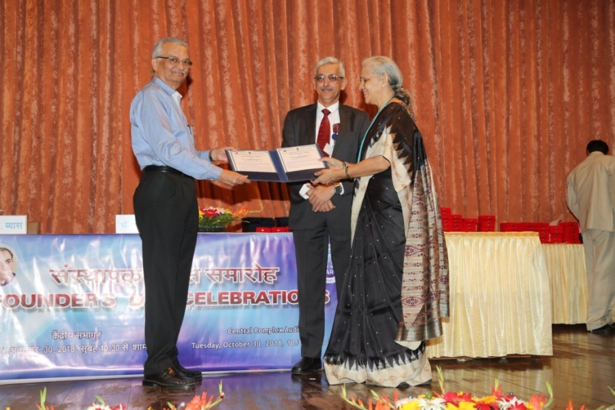
  • Bhabha Science & Technology Award, DAE (2003)
  • Indian Nuclear Society Outstanding Service Award (2015)
  • DAE Group Leadership Achievement Award (2017)
  • Former Head, Chemistry Division, BARC
  • Senior Professor, Homi Bhabha National Institute
  • Marie Curie Post-Doctoral Fellowship — European Union (1995)
  • Young Investigator Award, Canada (1991)
Honours

Awards & recognitions

National and international recognition for outstanding contributions to science spanning four decades.

1
Young Investigator Award, 9th International Congress on Radiation Research, Canada (1991)
2
Marie Curie Post-Doctoral Fellowship, European Communities – Gray Laboratory, Mount Vernon Hospital, UK (1995)
3
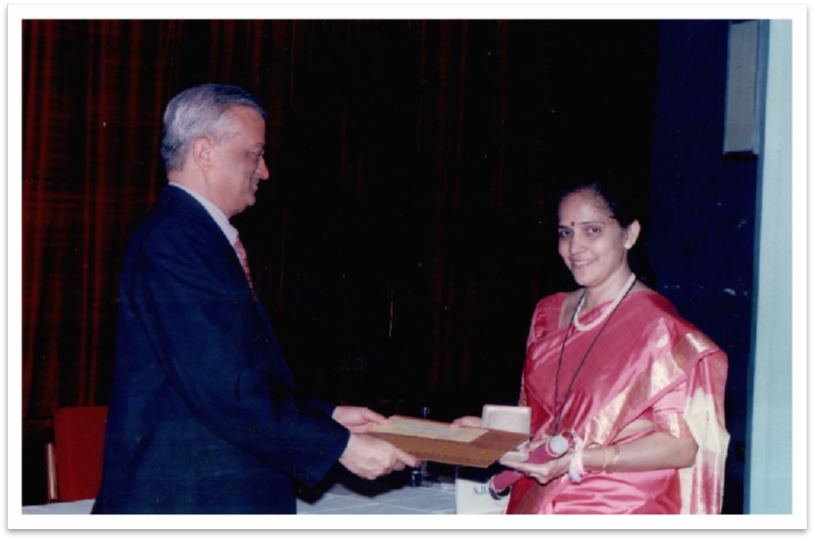
Homi Bhabha Science & Technology Award, Department of Atomic Energy, India (2003)
4
Fellowship of National Academy of Sciences – FNASc, National Academy of Sciences, India (2003)
5
Fellow, Royal Society of Chemistry (FRSC), UK (2009)
6
Fellow, Maharashtra Academy of Sciences (FMASc)
7
Outstanding Service Award – Radiation Technologies, Indian Nuclear Society (2015)
8
DAE Group Achievement Award, Department of Atomic Energy (2017)
9
Stanford Top 2% Scientists – Listed annually since 2020
10
Prof. Archana Sharma Memorial Lecture Award, National Academy of Sciences, India (2021)
11
“She is Women in Chemistry” – Book Series, RSC & Office of PSA, Government of India (2023)
Connect

Get in touch

For research collaborations, speaking invitations, academic enquiries, or professional correspondence.

Contact Information
Phone
+91 9999999999
Institution
DAE Centre for Excellence in Basic Sciences (CEBS), Mumbai University E-mail k.indira@cbs.ac.in
Send a Message

Messages submitted here appear inside the admin panel immediately.